
When a for-profit business has assets, they can usually use them however they want– to buy equipment, give raises, invest in real estate– but nonprofit assets are often more complex. The Statement of Financial Position gives you a snapshot of your financial health by revealing the underlying value of what your organization owns. But in your audited nonprofit financials, it will be called a Statement of Financial Position. Read our article on tracking business expenses; much of our guidance is transferable to nonprofit operations.

FREE 38+ Samples of Statement Templates
Keeping cash flow projections updated on a regular basis can take into consideration factors such as seasonality and the timing of fundraising events. This planning shows how to appropriately schedule disbursements and build reserves in lean times. Revenue recognition in nonprofits is intricate due to the varied sources of funding and the conditions donors often attach.
- The Statement of Activities summarizes the money you’ve received (revenues) and the money you’ve spent (expenses) during a given period.
- The default reporting classes which are used to link the trial balance values to the financial statement line items are included on the Classes sheet.
- Unlock sustainable funding for your nonprofit with our expert guide on venture capital strategies.
- In the first example, we assume that the interest received has been included with interest paid in the trial balance and the interest paid account has been linked to the I-06G reporting class.
- Financial statements prepared with care and accuracy help nonprofits continue changing lives and making a difference.
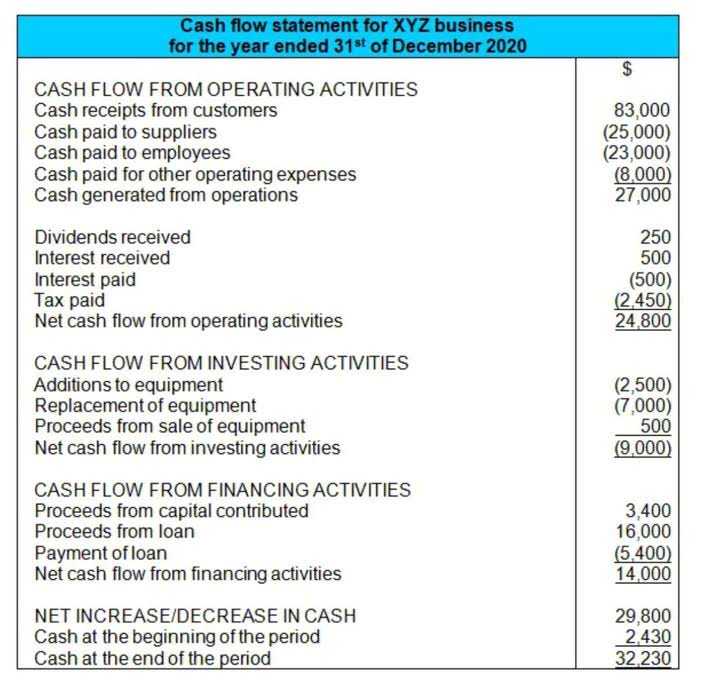
What is a nonprofit statement of cash flow?

These funds thus ensure long-term stability and growth and form the cornerstone of nonprofit net equity. Donors sometimes attach restrictions to the use of their gifts, which may be for a particular program, capital project, or endowment. These funds need careful tracking and nonprofit asset management to ensure that the nonprofit is following through on the donor’s wishes. Ideally, nonprofits should prepare internal financial statements monthly or quarterly for management purposes. However, externally, annual financial statements are standard, often accompanying required annual filings. This statement shows how changes in the balance sheet and income statement affect cash and HVAC Bookkeeping cash equivalents.

Why are nonprofit financial statements necessary?

If you’re ready for an accounting partner to ease the burden of monthly bookkeeping and accounting, reach out to us for a free consultation. But if you’re spending more than you bring in for several periods in accounting a row, you’re headed for trouble. The Statement of Activities further breaks down your revenue and expenses according to any restrictions limiting how or when you may use them.
Leverage Financial Software
Fixed assets can also include accumulated depreciation, the amount your fixed assets have decreased in value. Since functional expenses are a big theme for many investors, particularly the percentage of money you’re spending on programs, most nonprofit Statement of Activities are organized according to functional expenses. The expense section reports all cash that flows out of your organization, including pending expenses—those you know you’ve incurred but financial statements for nonprofits haven’t spent the money yet, such as payroll for hours worked the previous month. Restricted Revenue shows funds with donor-placed restrictions on how or when you can spend the money.
- Nonprofit accounting best practices recommend creating a Statement of Financial Position each month when the monthly accounting records are closed.
- The closer the liability’s due date is to the balance sheet day, the higher up on the liabilities section it will be.
- Regular audits, software for bookkeeping, and employee training all contribute to having a sound yet transparent financial foundation built on accuracy.
- If you want to edit any of the data that forms part of a paragraph, you need to edit the data in column P.
- All the account numbers and account descriptions which form part of the trial balance need to be included in column C and D on the TB sheet and the account balances need to be entered into the columns from column E onwards.